You've cleared the driveway, salted the steps, and packed the last box. Then, just as the moving truck is due to arrive, the snowplough comes past and leaves a fresh pile of snow across your driveway.
Moving in winter in Canada comes with a few extra challenges, but it doesn't have to be difficult. Most problems can be avoided with a little preparation and some flexibility around the weather.
Whether you're moving between Toronto condos or heading across provinces, these winter moving tips will help you plan for the cold, protect your belongings, and keep moving day running smoothly.
Is moving in winter a good idea?
Let’s first get the big question out of the way. Is moving in winter worth the hassle? Absolutely. Winter is generally a quieter season for moving, which can mean more flexibility with dates and potentially lower rates. You just need to plan around the weather.
And the cold isn't always the biggest concern. In Edmonton, for example, a dry day at –20°C can sometimes be easier to manage than a mild day when melting snow turns everything into slush, only to freeze again overnight.
It might just take a little extra planning to ensure a smooth move. Thankfully, a few small preparations can go a long way. Here are some simple tips to make sure your winter move goes off without a hitch, wherever you are in Canada.
Book both elevators before you book the truck
Moving between two Toronto condos? Before you settle on a moving date, check the service elevator availability at both buildings.
Most condos have designated moving hours, and popular time slots can book up quickly, especially around the first and last days of the month.
You want enough time to load at your old building, travel to your new address, and unload without running over your reservation.
Here's what to confirm with both building managers:
- Elevator bookings: What time slots are available, and how long can you reserve them?
- Moving restrictions: Are there designated moving days or hours?
- Loading access: Where can the truck park, and are there any height restrictions?
- Deposits and paperwork: Do you need to pay a moving deposit or provide insurance documents?
- Delays: What happens if bad weather means you miss your allocated slot?
It's also worth walking the route from the loading bay to your unit. Narrow hallways, sharp corners, and long distances between the elevator and truck can add time to the move.
Share photos of any tricky access points with your moving team beforehand.
Clear a path wide enough for the couch
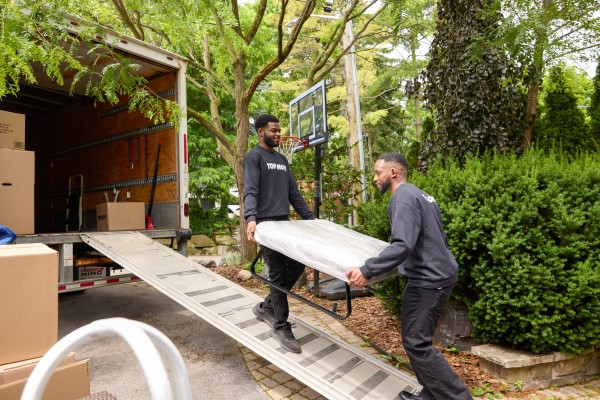
A freshly shovelled walkway is a good start, but remember that your moving team needs enough space to carry large furniture safely.
Before moving day, check the entire route between the truck and your front door at both properties.
Pay particular attention to:
- Driveways: Clear enough space for the truck to park and the loading ramp to extend.
- Walkways: Make sure they're wide enough for furniture, not just foot traffic.
- Steps and landings: Remove packed snow and treat icy surfaces.
- Gates and side entrances: Check that they open fully and haven't frozen shut.
- Driveway entrances: Watch for windrows, the ridges of snow left behind by passing snowploughs.
In Toronto and other snowy cities, you might clear your driveway in the morning only to find a new windrow after the plough passes. Check again shortly before the truck arrives.
If you're moving somewhere you can't inspect yourself, ask your landlord, building manager, or new neighbour to send a photo of the entrance that morning.
Watch out for Calgary's post-chinook ice
Calgary's chinooks can bring a welcome break from freezing temperatures, but the melting snow can quickly refreeze when temperatures drop.
A walkway that was clear yesterday might be dangerously slippery the next morning, particularly on shaded steps and sloping driveways.
Recheck these areas on moving day, even if you haven't had fresh snowfall.
Make sure your parking space still exists
Parking a moving truck can be tricky enough in a busy Canadian city. Add a few snowbanks, and suddenly that perfectly good parking spot isn't quite big enough.
Check how much room the truck needs, including space for its loading ramp and enough clearance to carry furniture.
If you're moving in Montréal, pay particular attention to temporary snow-removal restrictions. The city puts up temporary no-parking signs when crews are clearing snow, and these can override the usual parking rules.
Check restrictions the evening before your move and again that morning.
A few other things worth checking:
- Whether your street requires a temporary parking permit
- If snowbanks are blocking the intended loading area
- Whether the truck can safely park close enough to the entrance
- Whether there's an alternative loading spot if parking is unavailable
Moving into a Plateau walk-up? Don't forget to clear the outdoor staircase and landings. Those narrow, winding stairs are challenging enough without ice.
Pack for cold and wet weather
Freezing temperatures can damage certain belongings, while melting snow and rain can soak through cardboard boxes surprisingly quickly.
Some items need a little extra attention when packing for a winter move.
| Item |
How to protect it |
| Electronics |
Use protective packaging and keep everything dry. Allow electronics to reach room temperature before switching them on, following manufacturer guidance. |
| Houseplants |
Wrap plants to protect them from cold air and transport them in a heated vehicle where possible. Even brief exposure to freezing temperatures can damage sensitive plants. |
| Medication |
Keep medication with you in temperature-appropriate storage, following the instructions on the label. |
| Liquids |
Check which liquids your moving team accepts. Secure permitted containers and protect anything that could freeze, expand, or leak. |
| Appliances |
Empty and dry appliances where required. Check manufacturer instructions for transporting and restarting them, particularly refrigerators and freezers. |
And don't assume winter moving always means snow.
In Vancouver, you're often more likely to deal with heavy rain. Use waterproof furniture covers, protect mattresses, and keep cardboard boxes off wet pavement while loading.
For particularly valuable or moisture-sensitive items, plastic storage tubs may be a better option than cardboard.

Keep the slush at the door
Even with clear walkways, snow and slush will inevitably find their way inside when people are carrying boxes back and forth.
Protecting your floors before loading starts is much easier than cleaning up afterwards.
- Ask your moving team whether they provide floor runners or other protective coverings.
- Put absorbent mats at the entrances of both properties.
- Secure floor protection so it doesn't bunch up or become slippery.
- Keep a mop and some dry towels nearby for wet patches.
- Protect high-traffic areas, particularly hallways and entrances with wood flooring.
If you're moving into an empty home, try to have the heating switched on before the truck arrives. It makes unloading more comfortable and gives you somewhere warm to settle in afterwards.
Check the whole route and agree on a storm plan
If you're moving a long distance, checking the forecast at your departure and arrival addresses isn't enough. Weather conditions can change dramatically along the route.
For example, Vancouver could be enjoying a relatively mild, rainy morning while the Coquihalla Highway is experiencing heavy snow and poor visibility.
If you're moving between the Lower Mainland and B.C. Interior, check DriveBC for highway conditions, road closures, and live traffic cameras.
For other routes, consult provincial 511 services and Environment and Climate Change Canada for weather alerts.
If you're driving your own vehicle, make sure it meets any winter tire requirements along the route. B.C., for example, requires appropriate winter tires or chains on many designated highways during specified winter months.
Have a backup plan before moving day

A winter storm doesn't automatically mean cancelling your move, but it's worth knowing what happens if conditions become unsafe.
Discuss the following with your moving team in advance:
- Delays: Who makes the decision to postpone travel or loading?
- Costs: Will additional waiting time or rescheduling affect your final bill?
- Storage: Where will your belongings stay if the truck can't reach your destination?
- Delivery: How will a delay affect your expected arrival window?
- Communication: Who contacts your building manager or keyholder if plans change?
If your route involves a ferry, check the operator's service alerts as well.
Most importantly, leave some flexibility in your schedule, especially for an interprovincial winter move. Avoid arranging everything around an arrival time that leaves no room for unexpected delays.
Keep your winter moving-day essentials with you
It's always a good idea to keep an essentials bag separate from your moving boxes, but in winter it's particularly important.
If bad weather delays your belongings, you'll want everything you need for at least one night within easy reach.
Your winter moving-day checklist:
- Keys, ID, important documents, and booking details
- Medication and other daily essentials
- Phone charger and power bank
- Warm jacket, gloves, toque, and waterproof boots
- Spare socks and a change of dry clothes
- Toiletries and overnight essentials
- Snacks, water, and a few easy meals
- Bedding and anything needed for your first night
- Winter vehicle emergency supplies if you're driving
If you have children or pets, arrange somewhere warm and safe for them during loading and unloading, away from open doors and busy walkways.
It's also worth packing your kettle, mugs, and coffee or tea somewhere easy to find. A warm drink after a long moving day is always welcome.
FAQs about moving in winter in Canada
Do movers work in snow?
Yes, moving teams can generally work in manageable snowfall, provided the roads, parking areas, and walkways are safe. Heavy snow, freezing rain, or severe weather may cause delays or require rescheduling.
Is it cheaper to move in winter?
Winter moves can be more affordable because demand is often lower than during summer. However, costs still depend on the date, distance, access conditions, and the moving services you need.
What happens if there's a snowstorm on moving day?
Contact your moving team as soon as severe weather is forecast to discuss whether the move can safely go ahead. Any additional charges or rescheduling arrangements will depend on the terms of your booking.
Make your winter move easier with Wise Move

A little snow shouldn't get in the way of your next big move. With Wise Move, you can book trusted moving teams across Canada who know what it takes to move in Canadian winter conditions, from navigating snowy driveways to handling furniture in freezing temperatures.
Whether you're moving across town or across provinces, our moving teams can help get your belongings safely from A to B, whatever the season throws your way.