Toronto has no shortage of great high schools. The harder part is working out which one is actually right for your child.
Across the city, families can choose from strong neighbourhood schools, specialist arts and STEM programmes, Catholic schools, French options and well-known independent schools. But rankings only tell part of the story. Programmes, admissions, location and school culture all matter too.
And in Toronto, where you live can make a real difference. Your address may affect which public school your child can attend, while some specialist programmes have separate application or audition processes.
This guide covers 10 of the best high schools in Toronto, what makes each one stand out, and the practical things parents should consider before choosing.
10 of the best high schools in Toronto
Academic results have helped inform this list, but this isn’t a strict one-to-ten ranking. The latest Fraser Institute report ranks 747 Ontario secondary schools using province-wide academic indicators, but programmes, school environment, admissions and overall fit matter too.
| School |
Type |
Area |
Best known for |
| St. Michael’s Choir School |
Catholic |
Downtown |
Choral music and academics |
| Ursula Franklin Academy |
Public specialised |
High Park |
STEM, social justice and enrichment |
| Cardinal Carter Academy for the Arts |
Catholic specialised |
North York |
Intensive arts education |
| Bloor Collegiate Institute |
Public |
Bloor-Dufferin |
STEM and TOPS |
| Leaside High School |
Public |
Leaside |
Languages and French Immersion |
| Lawrence Park Collegiate Institute |
Public |
North Toronto |
Academics, French and school life |
| Humberside Collegiate Institute |
Public |
High Park |
French and music |
| Earl Haig Secondary School |
Public |
North York |
Claude Watson Arts Program |
| University of Toronto Schools |
Independent |
The Annex |
Selective academics and U of T connection |
| Branksome Hall |
Independent girls’ |
Rosedale |
International Baccalaureate |
St. Michael’s Choir School
St. Michael’s Choir School offers something you simply won’t find at a typical Toronto high school.
Located beside St. Michael’s Cathedral Basilica downtown, the boys’ school combines university-preparatory academics with intensive choral training. Students study music theory, rehearse regularly, receive private instrumental lessons and sing at cathedral Masses, concerts and special events. Admission includes both a vocal audition and academic assessment.
The academics are impressive too: St. Michael’s scored a perfect 10.0 in the latest Fraser report, placing it joint first in Ontario.
- Type: Catholic, boys
- Grades: 3–12
- Location: Bond Street, downtown Toronto
- Nearby neighbourhoods: Garden District, Church-Wellesley Village, Cabbagetown and St. Lawrence
- Known for: Choral music, university preparation and strong academics
Ursula Franklin Academy
Ursula Franklin Academy is small on purpose, and that’s a big part of its appeal.
The school is capped at around 500 students and takes a noticeably different approach to learning. Technology, maths and science sit alongside social justice, interdisciplinary projects and its standout Wednesday Enrichment Program, where regular classes make way for everything from robotics and debating to walking tours and community projects.
Sitting just north of High Park, UFA draws students from across Toronto rather than operating as an ordinary neighbourhood high school. Admission is through the TDSB specialised-program process.
- Type: Public specialised, co-ed
- Grades: 9–12
- Location: Glendonwynne Road
- Nearby neighbourhoods: High Park North, The Junction, Bloor West Village and Roncesvalles
- Known for: STEM, social justice, integrated learning and Wednesday enrichment
Cardinal Carter Academy for the Arts
For a teenager who already spends their spare time dancing, playing an instrument, performing or creating art, Cardinal Carter deserves serious consideration.
This North York Catholic school is built around the arts rather than simply offering them as extracurriculars. Students specialise in dance, drama, band, strings, vocal music or visual arts and digital design, while completing their regular academic programme. Every applicant must audition, with Grades 7 and 9 being the main entry points.
Cardinal Carter also scored 9.3 in the latest Fraser report – a good reminder that its arts focus certainly doesn’t come at the expense of academics.
- Type: Catholic specialised, co-ed
- Grades: 7–12
- Location: Willowdale
- Nearby neighbourhoods: Willowdale, North York Centre, Lansing and Bayview Village
- Known for: Dance, drama, music, visual arts and strong academics
Bloor Collegiate Institute
Bloor Collegiate is having a bit of a moment.
In 2025, the century-old school moved into a brand-new four-storey campus at Bloor and Dufferin, complete with science and robotics suites, computer-engineering labs, arts spaces and a competition-sized sports field. It’s also steps from Dufferin Station, which is no small advantage in a city where a teenager’s school commute can involve half the TTC map.
Its academic standout is TOPS, an enriched maths and sciences programme offering STEAM enrichment, competitions, excursions and senior AP opportunities.
- Type: Public, co-ed
- Grades: 9–12
- Location: Croatia Street, Bloor-Dufferin
- Nearby neighbourhoods: Wallace Emerson, Bloordale, Dufferin Grove, Brockton Village and Dovercourt
- Known for: TOPS, AP, STEM and its new purpose-built campus
Leaside High School
Leaside High School is a strong example of a neighbourhood school doing a lot of things well.
Its particularly strong point is languages. French Immersion has been offered here since 1987, alongside Core French and other world-language options, while students can also explore subjects such as digital photography, forensics and communications technology.
Leaside scored 9.1 in the latest Fraser report, putting it among Ontario’s top-performing secondary schools.
For local families, this is also one where the map matters: the regular programme is tied closely to its designated attendance area, so check the exact address rather than assuming anywhere with a “Leaside” real estate listing qualifies.
- Type: Public, co-ed
- Grades: 9–12
- Location: Hanna Road
- Nearby neighbourhoods: Leaside, Bennington Heights, Davisville Village and Mount Pleasant East
- Known for: French Immersion, languages and strong academics
Lawrence Park Collegiate Institute
Lawrence Park Collegiate has the feel of a classic North Toronto neighbourhood school – strong academics, plenty happening after the final bell and a community that gets heavily involved.
Alongside French Immersion, students can take part in band, strings, choir, drama, maths competitions and a wide range of sports. The school also offers a Specialist High Skills Major in hospitality.
Its 9.1 Fraser score places it alongside Leaside among Ontario’s highest-performing public high schools.
For families already looking around Yonge and Lawrence, Bedford Park or Lytton Park, it’s the sort of school that can become a genuine factor in the neighbourhood decision.
- Type: Public, co-ed
- Grades: 9–12
- Location: Chatsworth Drive
- Nearby neighbourhoods: Lawrence Park, Lytton Park, Bedford Park and Yonge-Lawrence
- Known for: Academics, French Immersion, arts and athletics
Humberside Collegiate Institute
Humberside has been part of the west-end landscape since 1892, and its leafy High Park setting gives it a very different feel from Toronto’s downtown schools.
French is one of its defining strengths: more than 40% of students study through French Immersion or Extended French. Its music programme is equally established, with strings, instrumental and vocal ensembles regularly performing around the school and local community – including at Bloor West Village events.
There’s also an unusual Media Studies offering unique to Humberside, giving the school another point of difference beyond its 9.0 Fraser score.
- Type: Public, co-ed
- Grades: 9–12
- Location: Quebec Avenue
- Nearby neighbourhoods: High Park North, Bloor West Village, The Junction and Roncesvalles
- Known for: French, music, media studies and strong academics
Earl Haig Secondary School
Earl Haig is one of North York’s largest and best-known high schools, but what really sets it apart is the arts.
The school effectively runs two experiences under one roof. Its regular Collegiate Program offers broad academic and extracurricular options, while the Claude Watson Arts Program provides enriched study in dance, drama, music and visual arts.
That makes Earl Haig particularly appealing to families who want serious arts training without separating it completely from a large, lively high-school environment. And with North York Centre and Yonge-Sheppard nearby, it’s one of the better-connected options on this list by TTC.
- Type: Public, co-ed
- Grades: 9–12
- Location: Princess Avenue, North York
- Nearby neighbourhoods: Willowdale, North York Centre, Lansing and Bayview Village
- Known for: Claude Watson Arts, broad academics and extracurricular choice
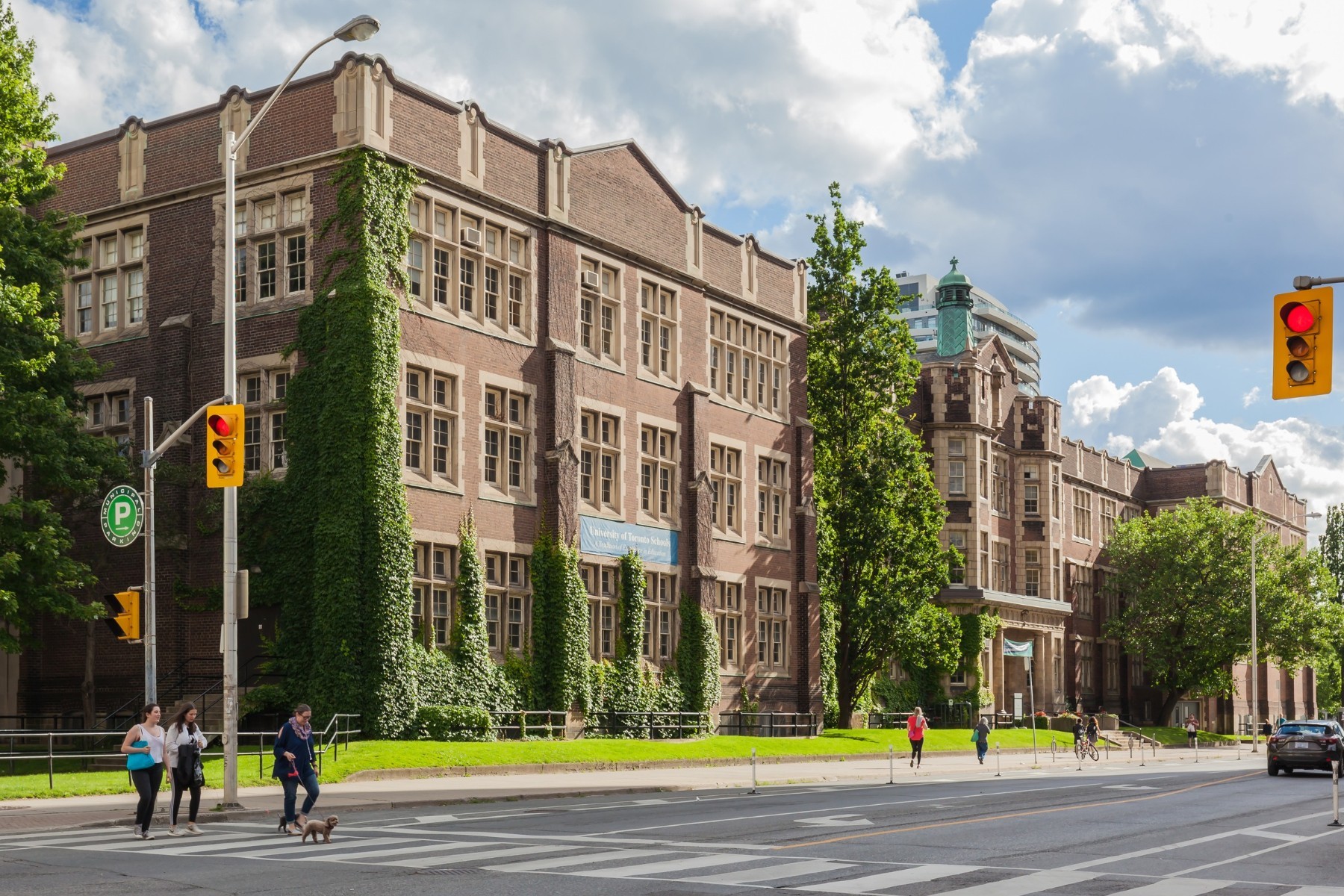
University of Toronto Schools
UTS is for students who genuinely enjoy being pushed academically.
The independent Grades 7–12 school sits right on the University of Toronto’s St. George campus, giving students access to university libraries and athletic facilities alongside its own science labs, innovation spaces and specialist art and music rooms.
Admission is highly competitive. For 2027–28, UTS expects only around 22 new Grade 9 places, with applicants completing an entrance exam followed by a second-stage interview and group task if selected.
- Type: Independent, co-ed
- Grades: 7–12
- Location: Bloor Street West, University of Toronto
- Nearby neighbourhoods: The Annex, Yorkville, Harbord Village and downtown Toronto
- Known for: Selective academics, innovation and its U of T affiliation
- 2026–27 tuition: CA$40,400
Branksome Hall
Tucked into a 13-acre Rosedale campus, Branksome Hall offers one of Toronto’s most established independent-school experiences for girls.
What really distinguishes it is the International Baccalaureate (IB). Branksome is Toronto’s only all-years independent IB World School for girls, with every student from Junior Kindergarten to Grade 12 learning through the IB curriculum. Senior students can pursue either the full Diploma Programme or the more flexible IB Select pathway.
Its central Rosedale location also means the campus feels surprisingly green while remaining close to the subway and downtown.
- Type: Independent, girls
- Grades: JK–12
- Location: Elm Avenue, Rosedale
- Nearby neighbourhoods: Rosedale, Summerhill, Moore Park and Yorkville
- Known for: IB, girls’ education and internationally focused learning
- 2026–27 day tuition: CA$45,140 for JK–Grade 10 and CA$49,120 for Grades 11–12
What to consider when choosing a Toronto high school
Rankings are useful, but Toronto gives parents a few other things to think about:
- Your child’s strengths: Look beyond marks to STEM, arts, French, athletics, school size and the kind of environment in which your teen actually thrives.
- Admissions: Some schools are neighbourhood-based, while UFA, Claude Watson and other specialised programmes have separate applications. Private and Catholic schools follow their own requirements too.
- Your address: For regular TDSB programmes, your home address usually determines your designated school. Out-of-area applications depend on the school’s current status and available space.
- The commute: Toronto may be one city, but getting from the west end to North York every morning can feel like crossing several. Factor in subway connections, rush-hour traffic and late-afternoon clubs or practices.
If you’re considering moving for a particular school, always check its current boundary and admissions rules first. Then start looking at which nearby neighbourhood actually works for the rest of the family.
Make your Toronto move easier with Wise Move

Finding the right high school can change how you look at Toronto. Suddenly, being close to Line 1, avoiding a daily trip across the DVP or finding a home within the right school boundary starts carrying a little more weight.
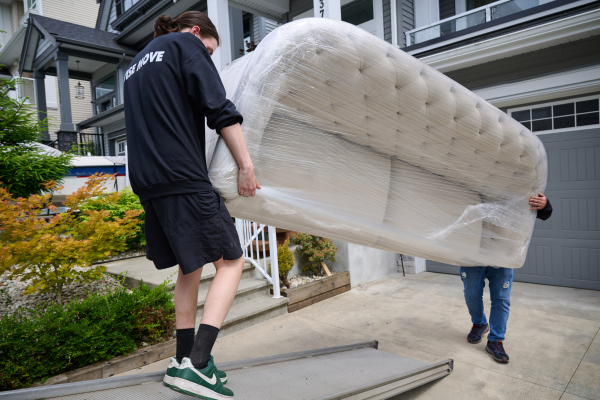
And if the right school leads you to the right new neighbourhood, Wise Move can handle the move. Book our trusted Toronto moving teams to get your family settled, so you can spend less time worrying about boxes and more time figuring out the new school run – and which local coffee shop is going to become part of it.